
The World Is Changing Faster Than We Can Process It
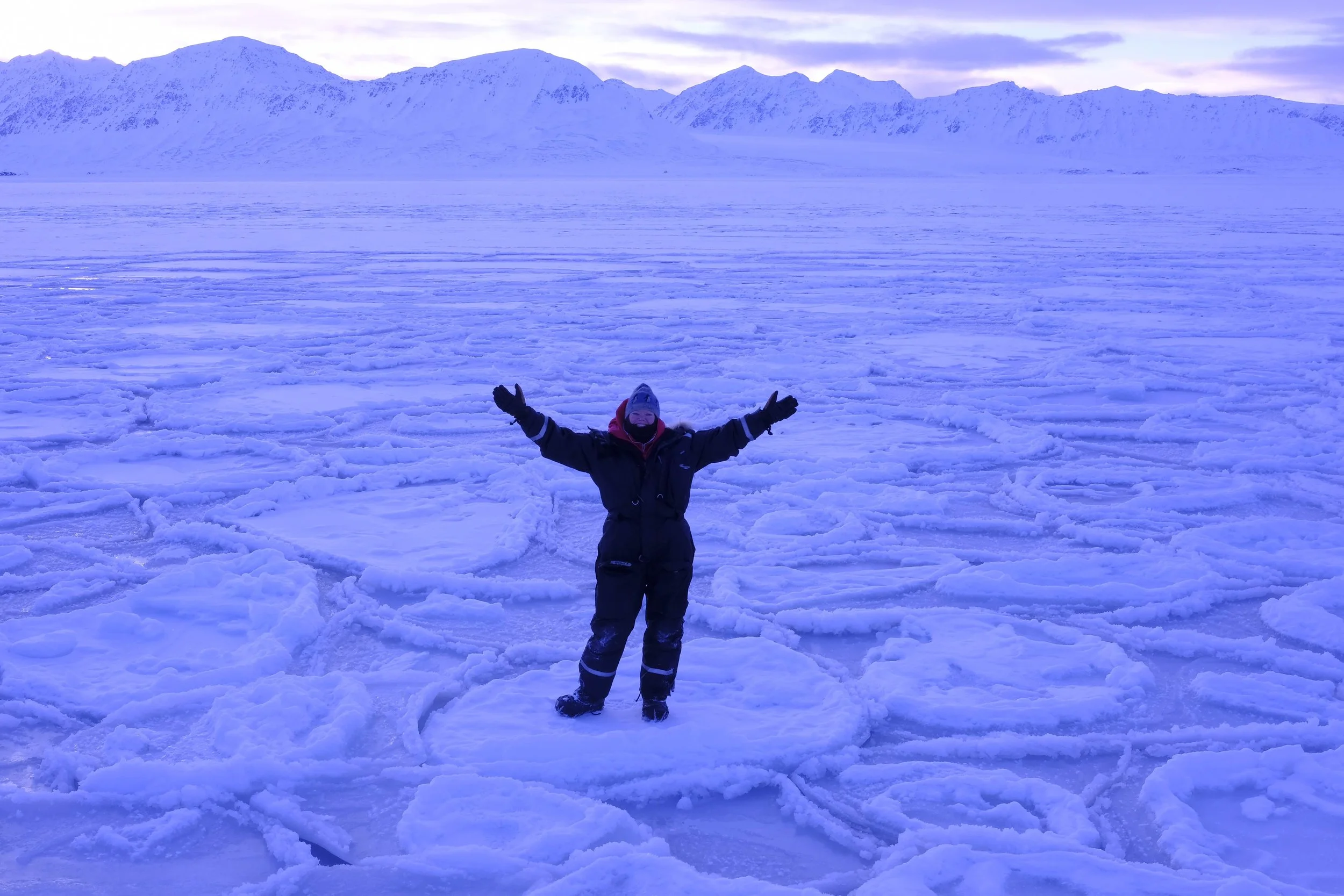
I fly to the ends of the Earth, just about every year. I stand on melting ice and share stories of Violet and other polar bears I’ve seen and I write about climate urgency. Then I fly home, burning jet fuel the entire way, adding to the very crisis I am trying to wake people up to.
This is not a new contradiction.
But it feels deeper and sharper now. I’ll be the first to admit the math doesn’t add up.
I spent time at Plum Village, the Zen community founded by Thich Nhat Hanh. I go to conferences. I read. I speak. I write. I try to stay awake to what is happening on this planet.
Here is what I know: I am not figured out, and I am not unique. I am just like a lot of people - trying to navigate the gap between what I know and what I do, between the magnitude of the crisis and the smallness of my individual actions.
I am not at all minimizing how much the small acts matter. On the contrary.
The real question is not whether to keep travelling to these places that call us.
The question is: what do we do with what we find there? How do we actually metabolize transformation?
How do we come home changed in a way that lasts, and that translates into something beyond our own private awakening? That is where the work gets interesting.
And that is where I have found some real sources of light and inspiration. The researchers who studied Antarctic tour guides named this gap clearly.
They asked: '
‘How can I fly there and talk about environmental change?
Every guide they interviewed carried genuine, aching love for the places they visit. And every guide was also fully aware of the carbon cost. Most resolved the contradiction through what psychologists call moral disengagement - finding ways to tell themselves the presence was worth the cost.
That bearing witness was enough.
I have pretty much told myself the same story. For thirty years, I have believed it. And I am still not sure it is wrong. But I am also not sure it is right anymore.
What I have learned from paying attention.
There are a few people whose work has become a kind of lifeline for me as I try to think my way through this - not to resolve it, but to understand it more honestly.
Kristine McDivitt Tompkins is one of them. She built the Patagonia company alongside Yvon Chouinard, became its CEO, and then at an age when most people think about legacy - she walked away from it. She didn’t walk away from the fight for the Earth, but away from the corporate version of it. She and her late husband Doug spent the last third of their lives buying private land in Chile and Argentina and rewilding it. Two million acres!!!!!!. Thirteen new national parks!!!!. Apex predators returning to places where they had been hunted to near extinction. A phenomenal story that came out last year- it’s called WILD LIFE.
Please give this a watch.
When she stood on a TED stage and talked about this work, she said something that I had to write down:
We need to remember that what we do reflects who we choose to be. Get out of bed every single morning and do something that has nothing to do with yourself, but rather everything to do with those things you love. With those things you know to be true.
This is not about individual guilt. This is about alignment. It is about waking up every day and asking: am I living the life I actually believe in? Or am I living a compromise I have learned to call by another name?
The other person who has become essential to my thinking is Michelle Valberg.
I am thrilled to host her on Pioneers of the Possible in May - one of Canada's most celebrated wildlife photographers, a four-decade career that spans all seven continents. What Michelle does with a camera is something most of us cannot do with words: she makes you feel the wild.
Not just understand it. Feel it. A spirit bear in the Great Bear Rainforest. A polar bear in the Arctic. Images that stop you and rearrange you from the inside out.
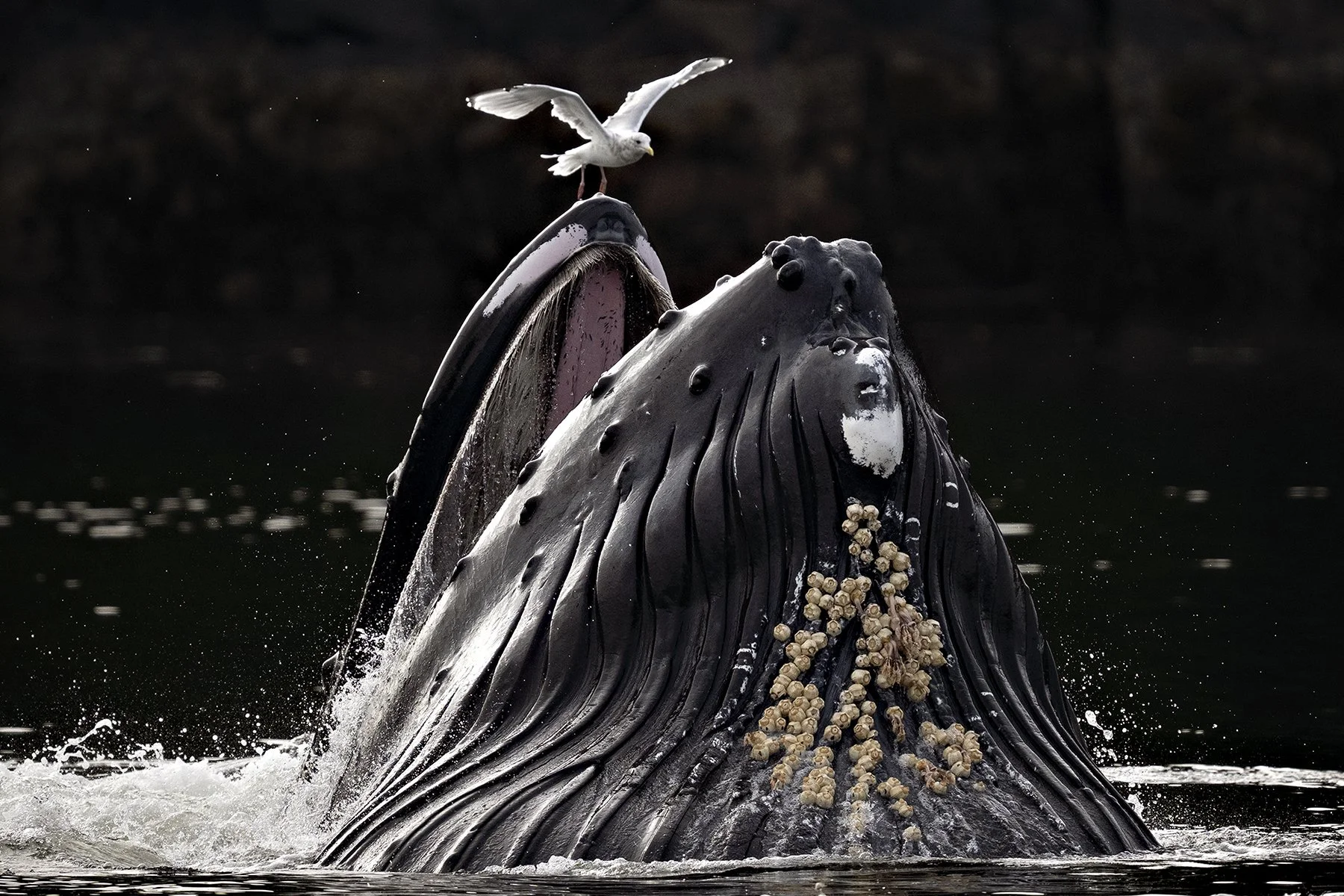
Photo Credit: Michelle Valberg Humpback & Gull
Michelle has also spent decades grappling with the same question: if you love these places, how do you responsibly show them to others? How do you create witness without creating harm? And she has done it by building something larger than herself - Project North, which delivered over two million dollars in sporting equipment to youth in more than 40 Arctic communities.
She mentors photographers. She leads expeditions. She understands that the image is only the beginning. What matters is what happens next - what the person does with the fact that they have been moved.
And then there is Dr. Suzy Ross.
I met Suzy recently at a gathering of the Transformational Travel Council in Laguna Beach. She is one of those rare people whose presence in a room shifts something - a deep, rich soul with a bright, pioneering mind. Her research is grounded in in more than a dozen disciplines including mythology, psychology, transformative learning, experiential education, natural sciences, and systems thinking. An important and unexpected outcome of the research is that it extends Joseph Campbell’s Hero’s Journey into what happens after the return.
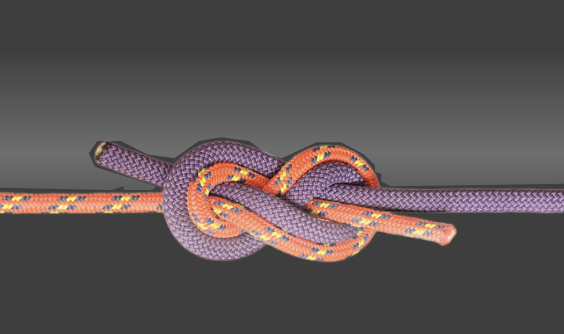
My first figure eight learned rock climbing….alot transpired since then!
Her research found that transformation is not complete when you come home. It is not complete when you tell people what you saw. It is complete only when the experience is integrated - when it reorganizes how you actually live. She didn’t map the figure 8, the model emerged from the lived experiences of participants in her study. Her research results: an upper loop of the transformative journey, and a lower loop of integration. Nine phases. Displacement. Grief and denial. Disorientation. Dismemberment. Surrender and healing. Birth. Abundance. Power and Integration.
I’m deep into reading her work now and it feels like someone has drawn a map of the last thirty years of my life. OYE!
Because here is what nobody tells you about going to Antarctica, or standing before a calving glacier in Svalbard, or watching a polar bear and her sweet cub move across ice that is disappearing beneath her pads: the experience itself is the easy part. The hard part is coming home. The hard part is sitting in your otherwise ordinary life with an extraordinary thing inside you and not knowing what to do with it. The hard part is the gap between what you felt and what the world seems to want from you.
Suzy names this disorientation as a necessary phase. Not a failure and not a sign that the experience didn't take. A sign that it did and that your old self is not large enough to hold it yet.
This is what I believe travel, done with intention, can do. Not produce ambassadors automatically. Not guarantee that someone who saw a polar bear will go home and change their behaviour.
But crack something open. Create the conditions for a different kind of attention. And then - if we give people the right tools, the right framework, the right community - allow that crack to become a doorway.
Which is why I am building what I am building.
In mid August 2027, I will begin walking the entire Vancouver Island Trail. 800 kilometres from Cape Scott in the north to Victoria in the south with a small team, a coastal support vessel, citizen science protocols, Indigenous community partnerships, and open join-in sections for anyone who wants to walk for a day, a week, or more.
I am not doing this because I have the answers. I am doing it because I believe in the question. What does it mean to pay deep attention to a place? What does it mean to collect data for science while also collecting stories for each other? What does it mean to walk through the territories of over 25 First Nations with enough humility to listen more than you speak? What does it mean to take 30 years of adventuring and creating projects far away from home to have my biggest undertaking be right here, on home soil?
The final days of that expedition - early October 2027 will coincide with the Jane Goodall Institute of Canada's Hike for Hope weekend. A portion of all fundraising will support the Jane Goodall Institute of Canada and the Transformational Travel Institute, two organizations working at the intersection of hope, action, and meaningful human experience.
Jane herself walked for decades - through forests, jungles, savannahs, and into the hearts of people around the world. She left behind instruction for all of us, not a eulogy: keep going.
What I want you to take from this.
You do not have to fly to Antarctica. You do not have to ski to the South Pole or overwinter in the Arctic. You do not have to resolve the moral contradiction of loving wild places and contributing to their destruction just by being alive in the modern world. None of us can fully resolve that. What we can do is stay honest about it.
Stay in the question. Keep going back to the places - or the people, or the practices - that crack us open and refuse to let us close back up.
Kristine Tompkins said it plainly: “the first step in rewilding is to be able to imagine that it is possible.”
I can imagine it. I have seen it. A former gaucho whose job was to hunt and kill mountain lions is now the head wildlife tracker for a national park. Jaguars are returning to wetlands where they had been absent for half a century. The green-winged macaw, missing for over a hundred years, is flying free again, dispensing seeds, living the life it was always meant to live.
What was gone is coming back. Not everywhere and certainly not fast enough. But it is coming back. And if we can imagine that for the land, we can imagine it for ourselves too.
The integration is possible. The transformation is possible. The life that is aligned with the things you love - that is possible.
But it requires, as Suzy Ross's research makes clear, that we do not skip the hard part. That we do not come home from the mountain and immediately start performing the experience for others before we have actually lived through it ourselves. That we allow the disorientation to do its work. That we surrender to the figure-eight.
I am somewhere in that loop right now. I probably always will be.
But I am still walking.
